
The Difference Between Pixel Lightsticks and Traditional RGB Lightsticks
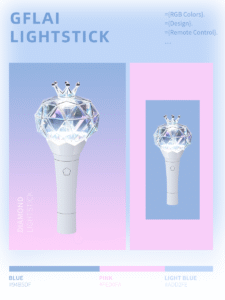
In today’s concert culture, lightsticks have evolved far beyond simple glowing accessories. Fans expect immersive, synchronized visual effects—something that helps them feel truly connected to the performance. As technology advances, two major categories of lightsticks dominate the event market: Pixel Lightsticks and Traditional RGB Lightsticks. While both serve a similar purpose—brightening the venue and creating atmosphere—their functions, features, and visual impact are dramatically different.
Understanding these differences can help event organizers, agencies, and idol groups choose the right lightstick design for their needs.
1. What Are Traditional RGB Lightsticks?
Traditional RGB lightsticks are the earlier, simpler technology used in concerts. These lightsticks use RGB LEDs (Red, Green, Blue), allowing them to generate multiple colors but typically in a single unified light output.
This means one lightstick glows in one color at a time, and the entire product changes color together.
Key Characteristics:
-
Displays one color at a time
-
Controlled by simple wireless or IR remote
-
Basic flashing or color-changing modes
-
Lower cost and easy mass production
-
Suitable for small to medium events
Although they provide synchronized effects (like waves of color or flash patterns), the visual performance is limited—especially when compared to the demands of high-budget concert productions.
2. What Are Pixel Lightsticks?
Pixel Lightsticks represent the next generation of concert lighting technology. Instead of treating the lightstick as one light source, it is divided into multiple independently addressable LED zones, sometimes called pixel nodes.
Each pixel can display different colors and effects in real time, enabling highly dynamic animation patterns such as:
-
Running lights
-
Rainbow gradient effects
-
Text or logo patterns
-
Color wave motion
-
Precise timing synchronization with music
-
Multi-segment choreography
Pixel lightsticks are typically controlled via APP, RF, or 2.4G point-control systems, allowing hundreds or thousands of units to run the same animation in perfect harmony.
3. Performance Comparison: Pixel vs. RGB Lightstick
| Feature | Traditional RGB Lightstick | Pixel Lightstick |
|---|---|---|
| Light Output | One uniform color | Multiple independently controlled sections |
| Visual Effects | Simple transitions | Complex patterns, animations, gradients |
| Event Scale Suitability | Small/Medium events | Large stadium or global tours |
| Control System | IR/Basic RF | APP, RF, 2.4G Point-Control |
| Fan Experience | Good | Immersive and highly interactive |
| Cost | Lower | Higher but justified by performance |
Pixel Lightsticks clearly offer more impressive visual abilities, making them ideal for concerts where branding, choreography, and emotional connection matter deeply.
4. Why Pixel Lightsticks Are Becoming the Industry Standard
Modern concerts—especially in K-Pop, Japanese idol culture, international tours, and live broadcasting events—require lighting that enhances storytelling and emotional immersion.
Pixel technology allows lighting designers to treat the audience like a live LED screen, creating synchronized visual effects that match the music, dancer formations, and stage lighting. Fans no longer just watch; they participate.
This shift transforms concerts into unforgettable shared experiences—and that is why top-tier event planners increasingly choose Pixel Lightsticks.
5. When Traditional RGB Lightsticks Still Make Sense
While Pixel Lightsticks dominate premium events, traditional RGB lightsticks still have a place. When budgets are limited or the event style is simple—such as marathons, student events, festivals, or store launches—RGB lightsticks offer great value:
-
Lower cost
-
Faster production
-
Simple user operation
For events prioritizing branding or atmosphere over complex visual choreography, RGB remains a solid option.
Conclusion
Both pixel and RGB lightsticks contribute to the magic of live performances, but their impact differs significantly. Event planners must consider production scale, performance requirements, and fan experience expectations when choosing the right type.
If the goal is a fully immersive, dynamic, and unforgettable concert visual, Pixel Lightsticks are clearly the future.
But for smaller events or tighter budgets, Traditional RGB Lightsticks still offer a colorful, effective solution.


